
GRP COMPOSITES
A Composite is a combined material created by the synthetic assembly of two
or more components to give specific characteristics and property. Glass Fibre Reinforcement and a compatible matrix with an addition of a filler are commonly referred as composites. The Composites are created to combine similar or dissimilar material in order to develop specific property and desired characteristics. Composites provide sufficient flexibility to meet the demands of different environments as well as specific requirement.

Characteristics of Composites
When we combine a set of materials the resulting composite is much superior in properties than the materials by itself. Although the composite is composed of different material the composite behaves like a single product. The following are the characteristics of composites.
Light Weight
High strength to weight ratio
Design Flexibility
Integration of functions
Dimensional stability
Advantage of Glass Fibre
Mechanical Strength
Electrical Insulator
Non-Flammable
Moisture Resistant
Advantages of Glass Fibre Reinforced Plastics
Lightness
Easy to Shape
Integration of Function
Dielectric and thermo-mechanical properties
Corrosion properties and good chemical resistance
Improvement in surface finish
Recyclability
Major Markets for the Glass Fibre Reinforced Plastics
Composite materials can be used in a number of application within the transportation market. The benefits of using composites include greater fuel efficiency, corrosion resistance, low weight and high strength. Composites also provide a low cost-way to help evolve new designs. Some of the major applications in this sector are body panels, structural parts, semi structural parts and railway & bus body components.
Composite application for electrical and electronics market include light poles, circuit boards, electrical junction boards and ladder rails. The benefits of using composites in these applications include high strength, low weight, dimensional stability, design flexibility, cost performance and corrosion resistance.
Stability is the main criterion for any material used in aerospace and aircraft applications. Composite materials combine light weight with the ability to withstand heavy loads and provide excellent resistance to bumps and impact.
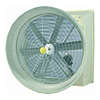
Composites can be used in gears, pans, housing and other components for household appliances such a washers, washing machine drums, dryers, waste disposal units, air conditioners and humidifiers. Composites can also be used in computer terminal housings and in business equipment such as copiers, mailing equipments.
Application in this market include all types of pipes, oilfield pipes, fume handling ducts, underground petrol tanks, sucker rods, water, waste water drainage and irrigation piping, flood control and navigational waterway structures, energy production structures for oil and gas production and many more.
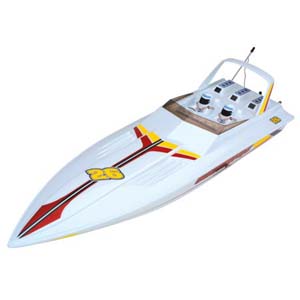
Usage of composites in marine market includes the construction, maintenance and repair and equipping of fishing boats powerboats, sail boats and other crafts. Advantages are high strength, less weight, corrosion resistance, dimensional stability and design flexibility.
Composite materials can be used in the manufacture of windmill blades and other accessories. Apart from light weight, the other advantages of composite materials in this industry are high tensile strength, corrosion resistance and weathering resistance.